
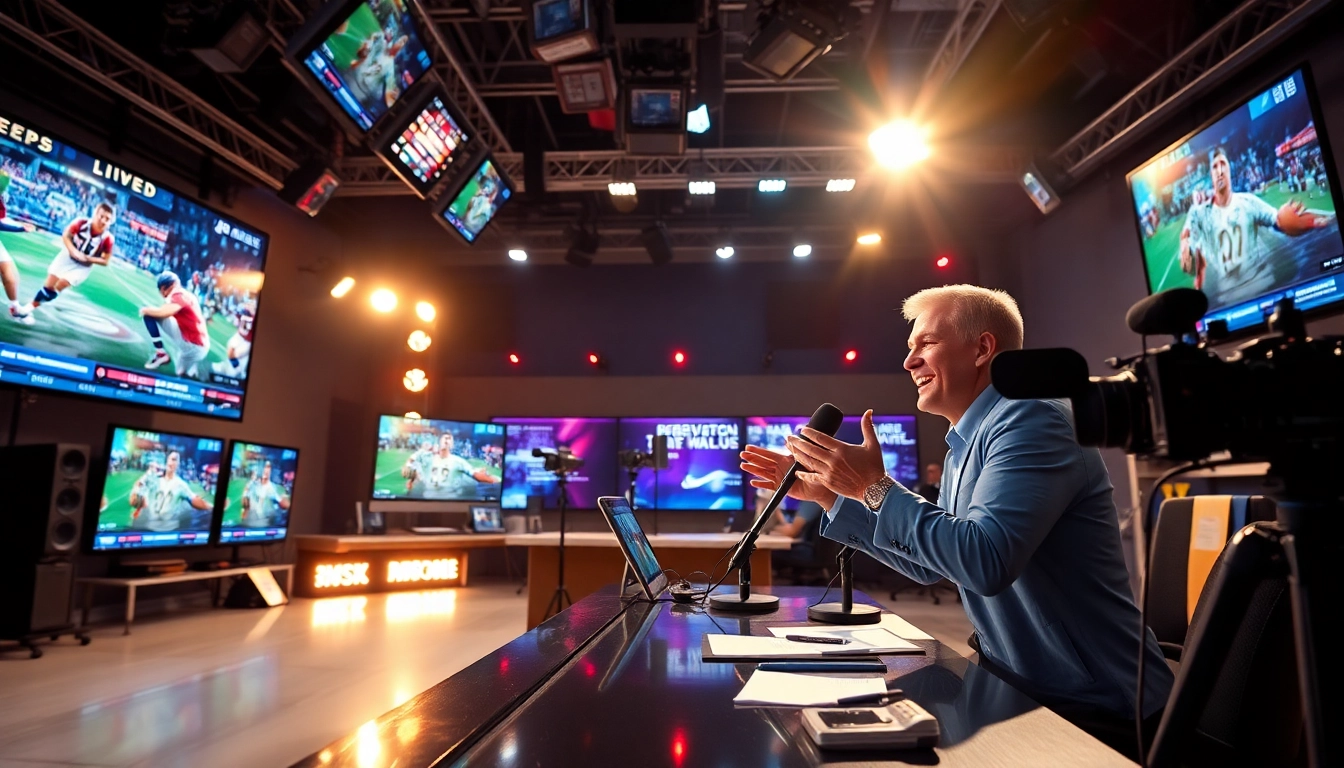
Introduction to Sports Broadcasting
Definition and Importance of Sports Broadcasting
Sports broadcasting plays a crucial role in connecting fans with their favorite sporting events, teams, and athletes. It encompasses the live telecasting, commentary, and analysis of various sports. This form of media extends beyond mere entertainment; it fosters community engagement and offers unique insights into the sports world. From local games to international championships, Sports Broadcasting serves as a vital conduit between the sporting universe and the audience.
The Evolution of Sports Broadcasting
Originating in the early 20th century, sports broadcasting began with radio broadcasts in the 1920s, where play-by-play commentary brought live events into listeners’ homes for the first time. The advent of television in the 1950s revolutionized the industry, allowing viewers to watch games live, creating a more immersive experience. The rise of cable networks in the 1980s further diversified content, while the digital transformation of the 2000s opened doors for streaming services, making sports accessible worldwide. Today, advancements in 4K and 8K technology, virtual reality, and augmented reality promise to shape the future of sports broadcasting, enhancing viewer experiences dynamic with unprecedented realism and interaction.
Key Technologies in Sports Broadcasting
The backbone of effective sports broadcasting relies on a multitude of technologies. High-definition cameras and drones are utilized for aerial views and close-ups, providing audiences with a comprehensive view of the action. Additionally, graphics integration and augmented reality displays enhance storytelling by presenting statistics and player insights directly on-screen. Automated replay systems and data analytics tools support broadcasters in delivering pertinent real-time information and analysis, elevating the overall broadcast quality. Furthermore, the shift towards mobile and internet-based broadcasting has made sports content accessible anytime, anywhere, catering to a tech-savvy audience.
Understanding the Audience in Sports Broadcasting
Analyzing Viewer Preferences
Understanding the audience is fundamental to successful sports broadcasting. Viewer preferences vary tremendously based on demographics, such as age, location, and gender. Engaging with audiences requires thorough analysis, often conducted through surveys and social media feedback. This data helps broadcasters curate content that resonates, including choosing which sports, teams, and events to feature. For instance, younger audiences may prefer interactive content while older viewers might gravitate towards traditional sports formats. By utilizing audience segmentation techniques, broadcasters can tailor their offerings, hence maximizing viewer engagement and loyalty.
Techniques for Audience Engagement
Engaging audiences in sports broadcasting involves creativity and strategic planning. Leveraging interactive platforms such as live polling during broadcasts encourages viewer participation and fosters a sense of community. Commentary that includes storytelling techniques allows broadcasters to create emotional connections with viewers. Additionally, offering access to behind-the-scenes content and conducting interviews with athletes enhances viewer loyalty. Crucially, responding to audience feedback and adjusting programming to meet their desires is a fundamental practice that helps in retaining viewership and establishing a loyal fanbase.
The Role of Social Media in Sports Broadcasting
Social media has fundamentally changed the way sports broadcasting operates. It acts as both a promotional tool and a platform for real-time interaction. Broadcasters can share live updates, highlight reels, and behind-the-scenes clips instantaneously, engaging viewers and building anticipation. Platforms like Twitter and Instagram enable broadcasters to create two-way communication with fans, offering a unique opportunity for engagement. Moreover, social media analytics provide invaluable insights into what content resonates best with viewers, allowing sports broadcasters to hone their strategies effectively. In this environment, prompt responses and engagement lead to increased reach and authority within sports media.
Best Practices for Producing Engaging Content
Crafting Compelling Narratives
Crafting compelling narratives is vital for capturing an audience's attention. Whether it’s the heart-wrenching story of an underdog athlete or the history behind a significant sports rivalry, narratives create emotional hooks that resonate with viewers. Effective storytelling involves clear structures, such as establishing a conflict (the game), weaving character arcs (the athletes), and culminating in a climactic resolution (the outcome of the game). Employing relatable themes not only captivates the audience but also builds a deeper connection with the sport.
Utilizing Visuals Effectively in Sports Broadcasting
In the world of sports broadcasting, visuals hold immense power. High-quality visuals, including slow-motion replays, close-up shots, and well-designed graphics significantly enhance viewer engagement. Motion graphics can be utilized to illustrate statistics and player information in an engaging format, making potentially dry data more accessible and exciting. During live broadcasts, effective camera angles and shot selections can highlight pivotal moments, drawing viewers into the action. Utilizing augmented reality overlays for real-time stats and interactive elements further enhances the visual storytelling experience.
Strategies for Live Coverage Mastery
Live coverage requires a unique skill set and agility. Broadcasters need to be prepared for unexpected events, from last-minute game changes to unforeseen incidents. Establishing a clear communication protocol among the production team ensures seamless coverage. It’s crucial to maintain an appropriate balance between providing commentary and allowing viewers to experience the game themselves. Developing a structured yet flexible format helps, as does prepping for potential scenarios during the broadcast. Practicing the art of spontaneous commentary while maintaining factual accuracy and engaging storytelling can elevate live coverage significantly.
Challenges in the Sports Broadcasting Landscape
Adapting to Technological Changes
The rapid pace of technological advancements presents challenges for sports broadcasters. New technologies emerge frequently, and keeping up with trends such as virtual reality and AI-driven analysis can be daunting. Broadcasters must invest in ongoing training for their teams to stay ahead of the curve. Moreover, incorporating new technologies effectively into broadcasting formats is essential. Regularly assessing technological capabilities and strategically planning upgrades can ensure that broadcasters remain competitive while meeting the audience's evolving expectations.
Managing Audience Expectations
In an increasingly saturated media landscape, managing audience expectations poses significant challenges. With a plethora of streaming options available, audiences expect high-quality, immersive experiences. Broadcasters need to deliver consistent and engaging content to retain viewership. Regular feedback collection and monitoring trends in audience engagement can provide valuable insights for adjustments. Ensuring transparency regarding coverage changes and actively engaging with viewers regarding their preferences can foster trust and keep audiences anchored to their services.
Legal and Ethical Considerations in Sports Broadcasting
Legal and ethical considerations play a critical role in sports broadcasting. Broadcasters must navigate various regulations regarding copyright, broadcasting rights, and fair usage policies. Issues surrounding privacy, particularly when covering public figures, also require careful consideration. Upholding ethical standards in reporting and presenting information factually and responsibly protects the integrity of both the broadcaster and the sporting event. Establishing guidelines and regularly training broadcasters in legal obligations is essential in maintaining compliance and ethical broadcasting practices.
The Future of Sports Broadcasting
Trends Shaping the Future of Broadcasting
Several key trends are poised to shape the future of sports broadcasting. The integration of artificial intelligence is transforming content creation and distribution, facilitating personalized viewer experiences. Additionally, the rise of non-fungible tokens (NFTs) in sports is creating new revenue streams for broadcasters. Increased focus on inclusivity and accessibility in broadcasting, such as multilingual commentary and adaptive technologies for differently-abled viewers, indicates a significant shift towards ensuring that sports are enjoyed by all. Sustainability is also emerging as a trend, with broadcasters focusing on reducing their environmental impact while delivering content.
Predictions for the Sports Broadcasting Industry
Looking ahead, it is anticipated that sports broadcasting will continue to evolve dramatically. Streaming platforms are expected to dominate, with traditional cable fading in popularity. The shift to on-demand content consumption offers broadcasters opportunities to innovate, including interactive and immersive viewing experiences. Forecasts indicate that viewers will seek more personalized and community-driven content, leading to greater engagement and loyalty. Moreover, advancements like 8K broadcasts and virtual reality experiences are set to revolutionize how audiences connect with live sports.
Skills Needed for Future Broadcasters
Today’s broadcasters need a diverse skill set to thrive in an evolving landscape. Strong communication and storytelling abilities remain foundational; however, technological proficiency will be increasingly critical. Future broadcasters must familiarize themselves with data analytics and social media management to successfully engage audiences. Adaptability is key, as is the ability to work collaboratively in dynamic environments. Continuous learning and staying abreast of industry trends and technologies will be essential for maintaining relevance in this fast-paced industry.
FAQs
What is the primary role of a sports broadcaster?
A sports broadcaster informs and entertains audiences by delivering live coverage and commentary of sporting events.
How has technology impacted sports broadcasting?
Technology has enhanced sports broadcasting through high-definition visuals, real-time statistics, and interactive viewer experiences.
What are common challenges faced by sports broadcasters?
Common challenges include adapting to rapid technological changes, navigating audience expectations, and adhering to legal regulations.
How can broadcasters engage their audience effectively?
Broadcasters can engage audiences through compelling storytelling, interactive content, and leveraging social media platforms for real-time interaction.
What skills are essential for a successful sports broadcaster?
Essential skills include strong communication, adaptability, technical proficiency, and a deep understanding of sports and audience dynamics.